
Argentina has a way of exceeding expectations while simultaneously making you feel like you should have known it was going to be this good. It is vast, varied, and uniquely itself: a country of extraordinary landscapes, deep culinary tradition, and and a people whose culture reveals fascinating layers of history of its indigenous communities, waves of immigration, and the forging of something entirely their own. Two weeks across its breadth left me with fantastic travel memories, and a conviction that most visitors are only scratching the surface of what this country offers.
Read on for our guide to experiencing the best of this vast and fascinating country.
Buenos Aires: A City Worth Two Visits
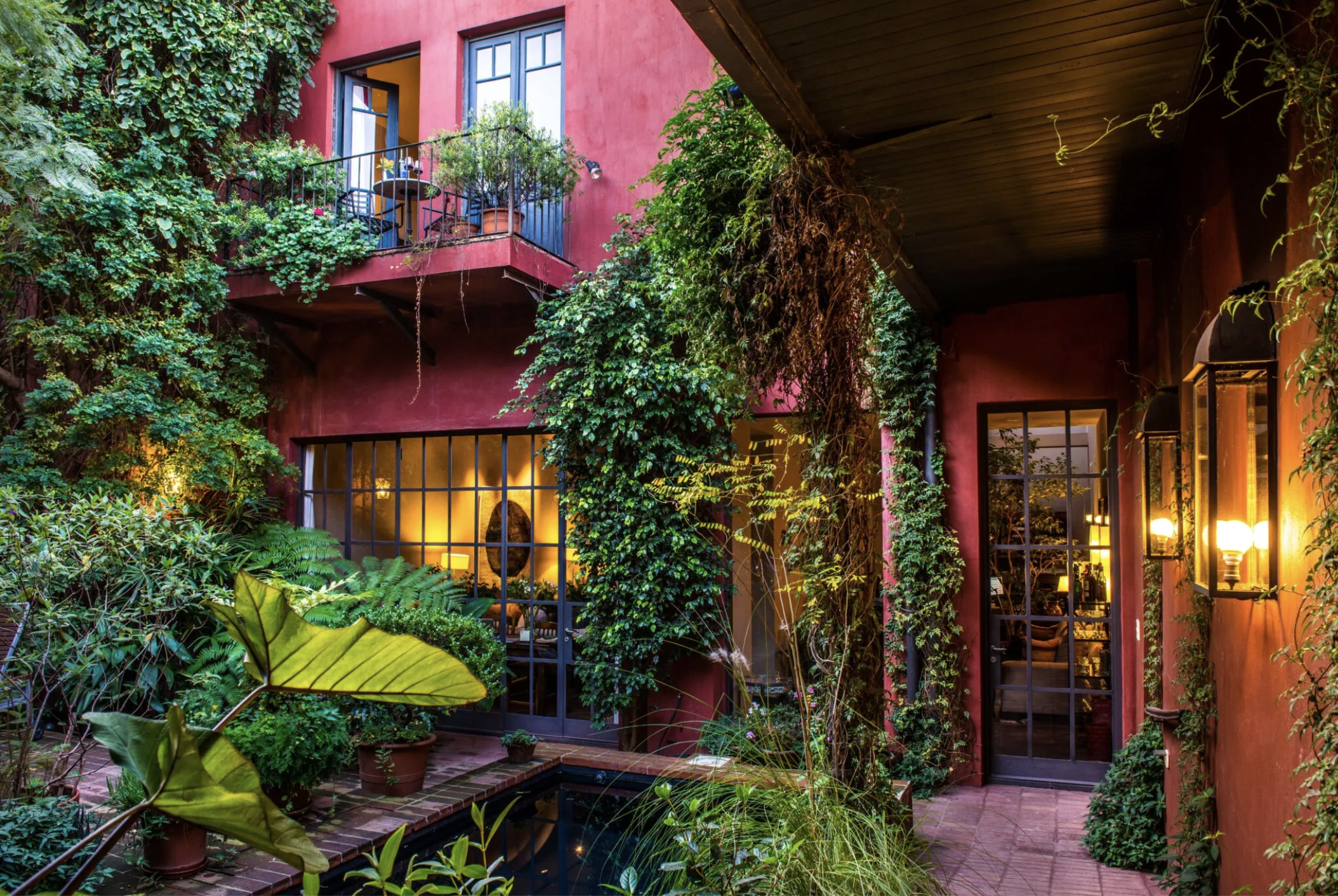
Be Jardín Escondido’s lush courtyard and stylish interiors are a perfect base for exploring the buzz and history of one of South America’s most vibrant capital cities, with Palermo Soho’s shops, restaurants, and nightlife just a few steps away.
Wide, tree-lined avenues, Belle Époque-inspired facades, abundant cafés, wine bars, and galleries: Buenos Aires rewards time with no plan beyond taking in the scene. We arrived into the posh Recoleta neighborhood, wandering to the famous cemetery to explore its clusters of family mausoleums — Eva Perón's included — and the nearby parks and squares. We returned for two final nights at the end of our journey, this time in the ultra-hip Palermo Soho neighborhood at Be Jardín Escondido — Francis Ford Coppola's former personal residence, now a boutique Coppola Hideaways retreat outfitted with the furnishings he originally selected for family visits. The Roman suite was filled with antique woven textiles, cowhide rugs, colonial furniture, and old Argentinian artifacts. Palermo Soho is bursting with creative energy: youthful, casual, effortlessly cool. We browsed boutiques showcasing local designers, stopped for vermut here and there, and ended with a 14-course tasting menu at Fogón — a 12-person chef's counter built around live fire: giant Patagonian prawns seasoned with burnt lime; delicate slices of ribeye cap smoked over pine cones.
We only just began to experience this city — as made abundantly clear by Ignacio, the mulleted concierge at Be Jardín Escondido, who spent half an hour talking us through neighborhoods, history, and everything we'd need to come back for. Those are the people who make you feel like a guest rather than a tourist.
Stay at: Casa Lucia (Recoleta) · Be Jardín Escondido (Palermo Soho) · Park Hyatt Buenos Aires
Eat at: Fogón · Elena at the Four Seasons · Picsa (empanadas and pizzas) · Mamuchka (Argentinian gelato)
Do: Recoleta Cemetery · San Telmo and Palermo Soho shopping · MALBA · cooking class with The Argentine Experience
Iguazú Falls & An Unmissable Base on the Argentina Side
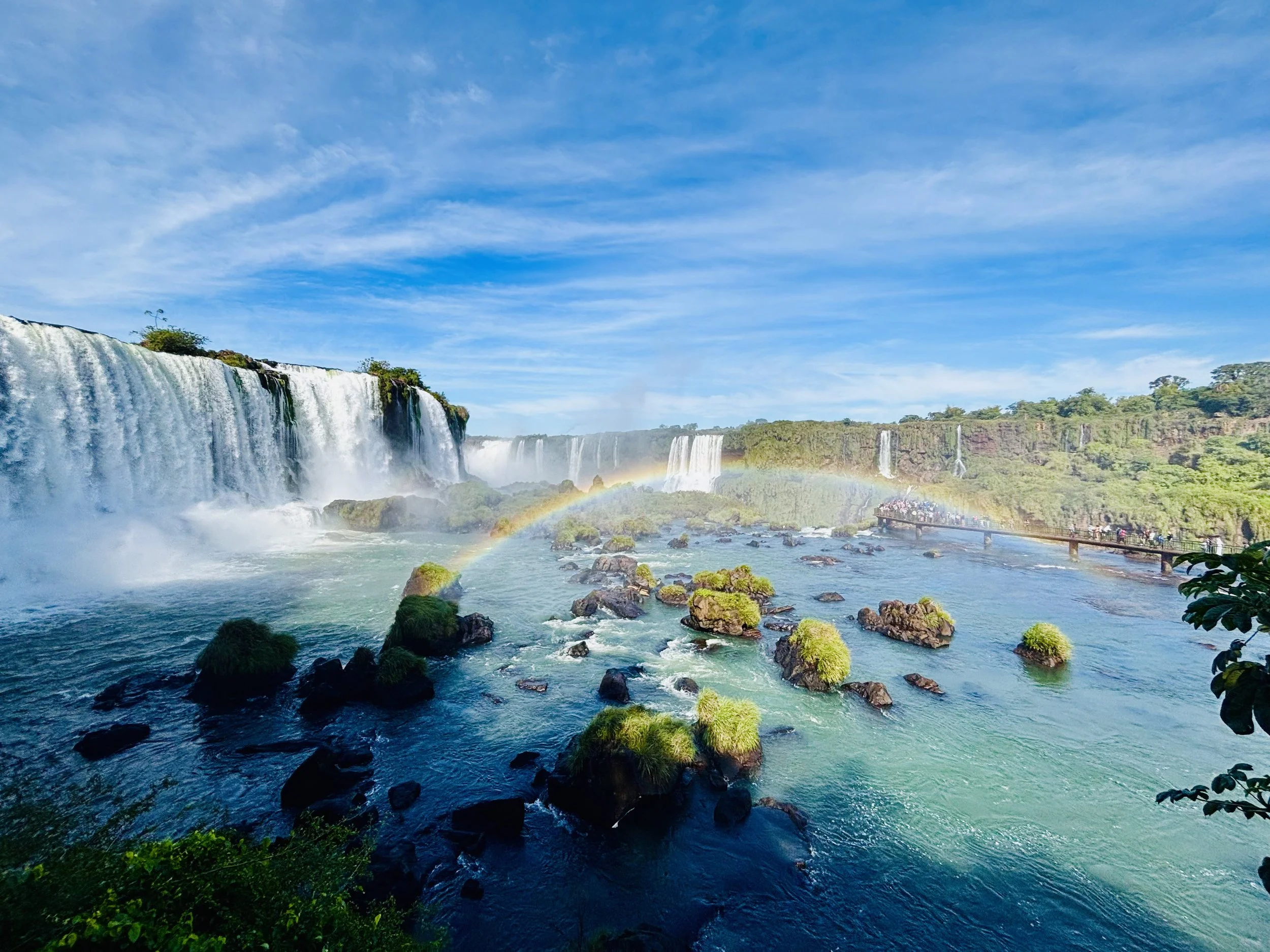
Iguazú Falls truly stuns. Wider than Niagara, taller than Victoria Falls, and nearly two miles across — the scale is hard to grasp from a photograph.
The falls straddle the border of Argentina and Brazil, and nearly every traveler faces the same question: which side? The answer is Argentina — and it's not even close.
We based ourselves at the Gran Meliá Iguazú, the only hotel actually within the national park on the Argentina side, in a room with a panoramic view of the falls. Being inside the park meant strolling out the door directly onto its extensive network of walking paths, beating the crowds and enjoying genuinely serene exploration of the basin before day-trippers arrived. A jetboat excursion with Iguazú Jungle Excursions combined a guided jungle drive and natural history lecture with the gleeful experience of being rocketed over rapids and pummeled by spray at the base of the falls. Be prepared to giggle and shriek like children on a carnival ride — when was the last time you really did that?
The Brazilian side is worth a day trip, for the broader panoramic views and a visit to Parque das Aves, one of the best bird parks in South America. The Belmond hotel on the Brazilian side is a genuinely stunning piece of colonial architecture with stylish decor to match; during my property visit it gave me a slight bit of heartache not to have stayed there. But the comparatively smaller Brazilian falls and much higher concentration of tourists doesn't make it worth choosing over the Argentina side and the Gran Meliá.
Iguazú stunned to a degree I did not expect. Wider than Niagara, taller than Victoria Falls, nearly two miles across — the scale is genuinely hard to grasp from a photograph.
Stay at: Gran Meliá Iguazú
Do: Argentina park walking loops · jetboat excursion with Iguazú Jungle Excursions · Brazilian side day trip including Parque des Aves
The North: Argentina's Best-Kept Secret
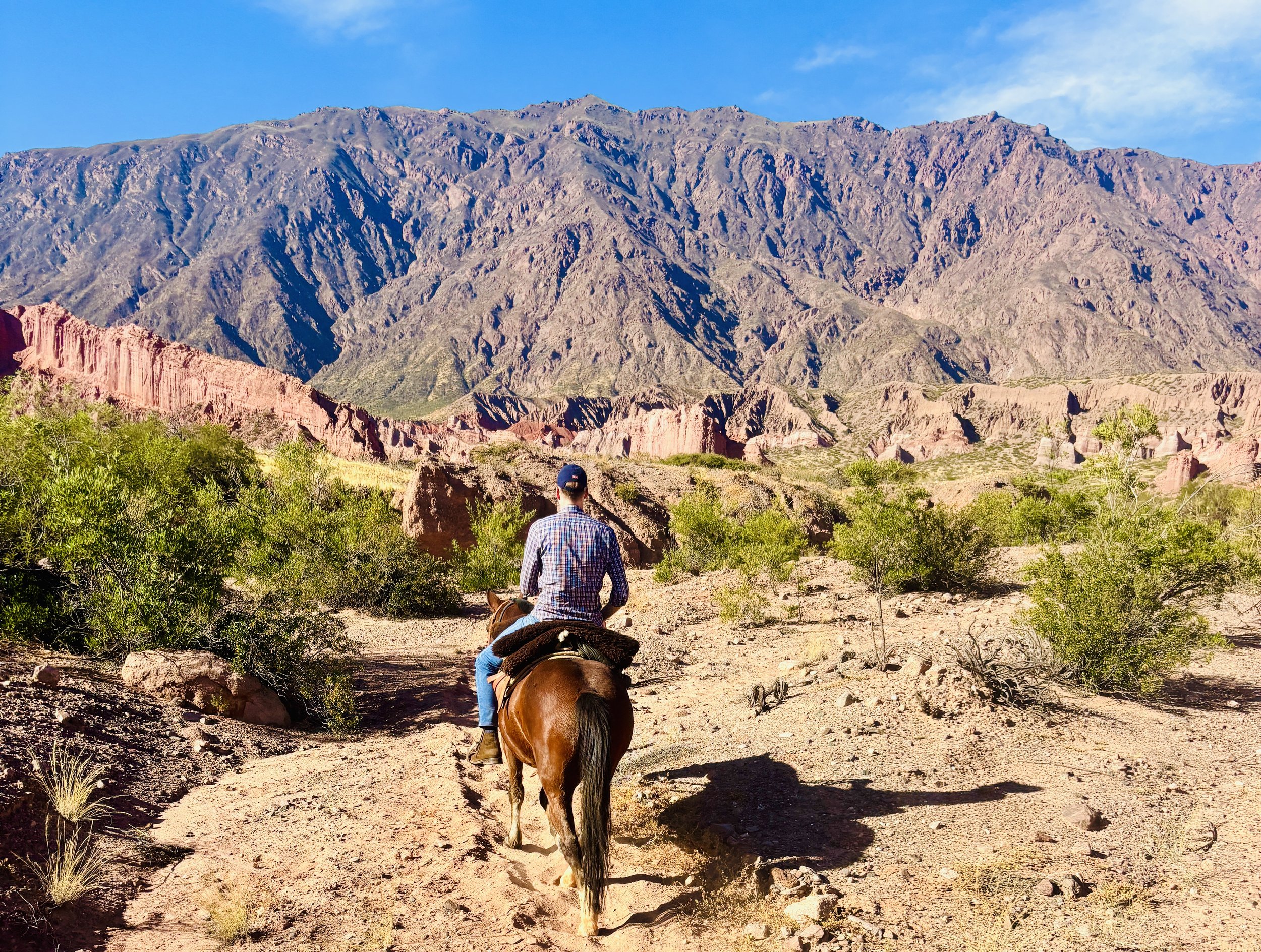
Riding into the canyons of the Quebrada de las Conchas is the best way to experience this protected and unspoiled region’s stunning terrain.
Relatively few international tourists make it to Argentina's north, and every local we encountered was enthusiastically approving of our decision to go. Their praise for the region's food, culture, and scenery was completely well-founded.
The drive from Salta to Cafayate passes through the Quebrada de las Conchas — an immense canyon of striking, multicolored geological formations that will feel immediately familiar to anyone who's been to Zion or the Arizona canyon country. I’m biased here, but the best way to experience it is on horseback. A two-hour ride across desert scrub, up a dry riverbed, and into the winding canyon trails with our guide Hernán communicated more about this place than any organized tour could: his 106-year-old grandmother living next door on the family's humble estancia, the local school with one teacher and barely a dozen students, the annual nine-hour ride to the highest point of the canyon on the feast day of the Virgin Mary. Experiencing Argentina's deep horse culture was a particular treat for me as a lifelong equestrian.
Cafayate is a hub for artisans from local tribes, with abundant indigenous pottery, woodworking, basketry, and woven goods centered on a lovely town square, and the epicenter of Argentina's Torrontés production: whites that are beautifully fragrant, floral, and crisp. The food in this region is incredible: Empanadas Salteñas are legendary for their hand-cut beef and potato stuffing but varied in their fillings, accompanied by delicious humitas and tamales (steamed corn dishes wrapped in corn husks, either mixed with pumpkin and onions or filled with spiced beef or other meats), locro (a mixed vegetable stew with chunks of goat or whatever’s available at the butcher), and fresh goat cheeses.
Salta city was not to be outdone: gorgeous 17th and 18th-century Baroque facades in vibrant rust-pink and mustard that echoed the colors of the Quebrada, street performers and locals out enjoying the evening, and an exceptional property in Legado Mítico. Founded by a pair of local architects, this converted colonial residence pays homage to Argentinian art and artifact at every turn — original artwork, antique handicrafts, ornate woodworking, a stunning library, an ivy-draped courtyard. It transports you to an elegant, bygone era of Argentina while still feeling incredibly chic and Instagrammable.
Stay at: Legado Mítico (Salta)
Eat at: Doña Salta (Salta) · Pacha Cocina (Cafayate)
Do: Quebrada de las Conchas on horseback · Cafayate artisan market · wine tasting at El Porvenir · Finca Don Lago
Mendoza: More Than Malbec
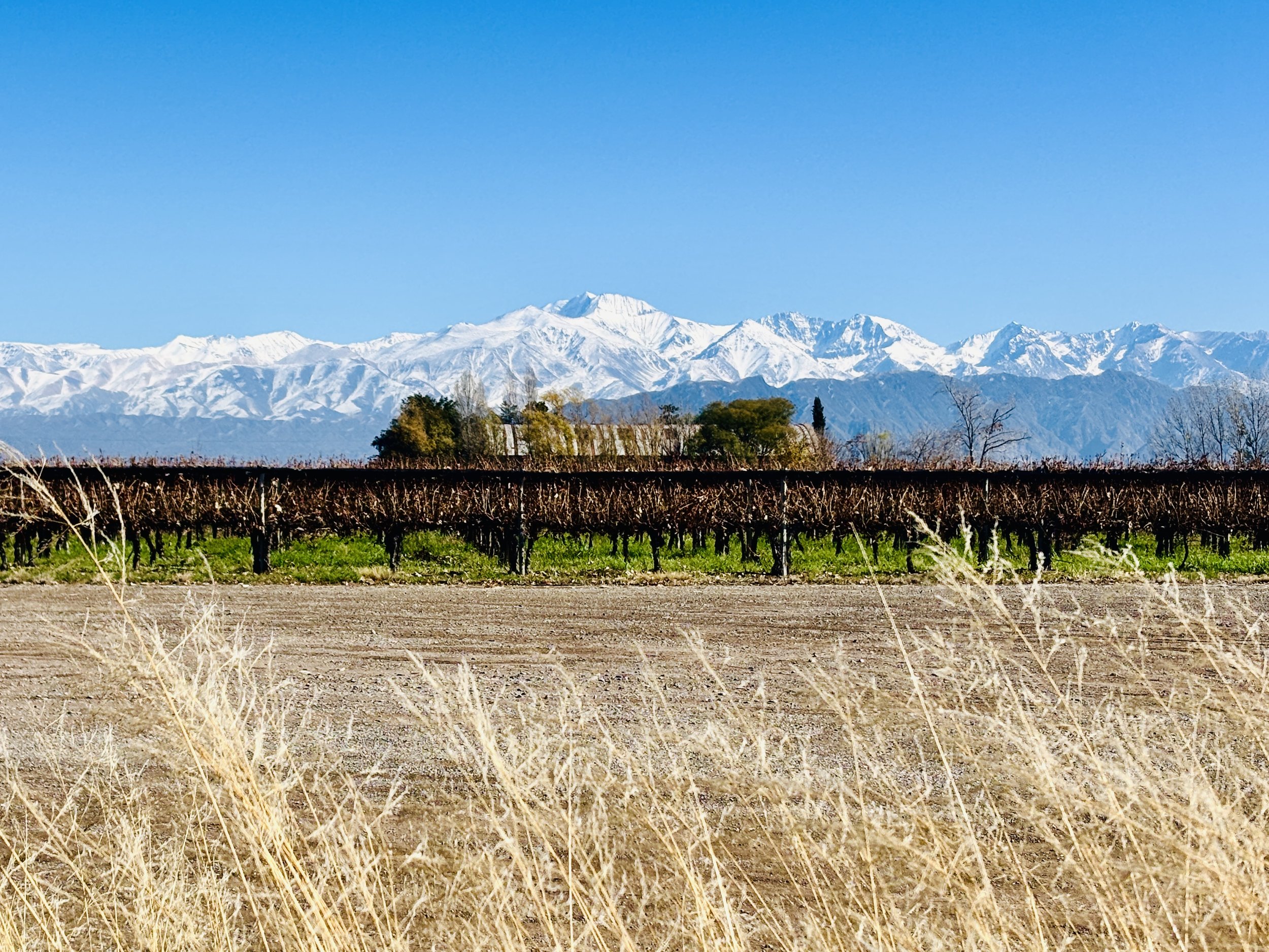
The Andes are visible from every view across Mendoza and the surrounding wine region. They are a truly breathtaking sight, inspiring long moments staring out at their snow-covered peaks.
Mendoza bowled me over. I was prepared for the scale of the Andes — I wasn't prepared for what it feels like to stand at the foot of them, or for what that landscape does to wine.
The desert geography of the region makes for a fascinating winemaking climate: elevations above 3,000 feet, rocky glacial soils, strong diurnal temperature swings. The result is wine that's simultaneously elegant and powerful, with the freshness and acidity of cool nights and the structure of vines forced to work hard in difficult ground. I was not a Malbec person before this trip. The answers were as nuanced and interesting as I had hoped — Malbecs here are nothing like the heavy, overripe, unsubtle bottles we too often find in the States. Beyond Malbec, winemakers are producing beautifully balanced Chardonnays, savory and vegetal Cabernet Francs, silky Merlots, and blends that hold their own against good Bordeaux. Skip the big commercial operations; the boutique producers are where the real conversation happens.
And where you'll eat the lunch you'll talk about for years. That would be Bodega La Azul, where the food is exceptional, the bottles of wine are unlimited, and the sax player on the lawn with an Andean backdrop is complete perfection.
We stayed at Awasi Mendoza, a wine lodge set among vines in Luján de Cuyo, just a short distance from the Cordón de la Plata ridge of the Andes. Service was note-perfect throughout: hot water bottles and a lit fire waiting after cold evenings; chilled pét-nat and a spread of olives, cheese, and house-made crackers arranged on the roof deck on our return from wine tasting, a few logs already going in the chimney so we could watch the sunset. A private excursion to Entreandes, a breeding farm for Argentina's prized criollo horses, took us back into the saddle, trekking into the foothills of Tupungato volcano before a long lunch at our host's home. A tango and asado evening featured live music and dancing in the salon before a multi-course barbecue with wine pairing. It is one of the finest hotels I've stayed at in years — and booking through East of Ordinary comes with complimentary nights and some of the most generous VIP perks I've encountered anywhere.
Stay at: Awasi Mendoza · Casa de Uco · Finca Adalgisa
Eat at: Bodega La Azul · Bodega Séptima
Do: Boutique winery tastings — RJ Viñedos, Finca Sophenia, Riccitelli, Zuccardi · Andes horseback riding and lunch excursion at Entreandes
